
In the world of product placement, there is a hierarchy. A soft drink is a prop; a car is a set-piece; but a wristwatch? A wristwatch is a character study.
As a product placement specialist and watch historian, I’ve watched how a simple timepiece can shift a film’s narrative or save a brand from bankruptcy. When a director chooses a watch, they aren’t just telling the time; they are telling you who the character is, how much they earn, and whether they can be trusted. From the rugged battlefields of Vietnam to the high-stakes boardrooms of Wall Street, here are the top 20 watch placements that changed both the film and the horological industry forever.
The Definitive Top 10: Magnitude & Impact
1. Hamilton Khaki Field “Murph” – Interstellar (2014)
Category: Best Plot Integration
The “Murph” is the ultimate “Wilson” (à la Cast Away) of horology. It is the primary plot device that saves humanity. Cooper uses the watch’s second hand to transmit NASA data via Morse code across time and space to his daughter. It isn’t just a watch; it’s a communication device and a metaphor for a father’s promise. Read my review of Hamilton’s product placement.

2. Omega Seamaster Diver 300M – GoldenEye (1995)
Category: Best Brand Turnaround
This placement saved Omega from the “Quartz Crisis.” By replacing Rolex as Bond’s official watch, Omega transitioned from a legacy brand to the modern action-hero standard. It remains the gold standard of marketing ROI 30 years later.

3. TAG Heuer Monaco – Le Mans (1971)
Category: Best Style Legacy
Steve McQueen chose this watch to match his racing suit. Though a commercial flop at the time, the film’s cult status turned the square-cased Monaco into the quintessential racing chronograph. The movie created the “Cool” that the brand still sells today.

4. Rolex Submariner Ref. 6538 – Dr. No (1962)
Category: The Original Icon
The foundation of modern product placement. By putting a rugged dive watch on a man in a tuxedo, this film created the “Action-Gentleman” archetype and made the Submariner the most aspirational timepiece in history.

5. Seiko 6105 “Captain Willard” – Apocalypse Now (1979)
Category: Best “Real World” Authenticity
Martin Sheen’s Seiko was a “grunt’s watch,” popular with actual soldiers in Vietnam. Because it wasn’t a forced, glossy placement, it gave Seiko an un-buyable level of rugged, battle-proven credibility.

6. Casio CA-53W Calculator – Back to the Future (1985)
Category: Best Pop-Culture Accessibility
The peak of 80s tech-optimism. This wasn’t about luxury; it was about being relatable. Millions were sold because it was the “everyman” hero’s gadget, making it a high-volume placement success.

7. Rolex Day-Date – Glengarry Glen Ross (1992)
Category: Best Script Integration
“See this watch? This watch costs more than your car.” Alec Baldwin’s use of the Rolex as a verbal weapon is the most iconic mention of a watch in cinematic history. It’s the catalyst for the entire “Always Be Closing” motivation.

8. Jaeger-LeCoultre Reverso – The Dark Knight (2008)
Category: Best Symbolic Mirroring
The Reverso’s flipping case – showing one face and hiding another – is a physical manifestation of Bruce Wayne’s dual identity. It is a masterclass in using a product to enhance a character’s psychology.
9. Rolex Day-Date “President” – The Sopranos (TV)
Category: Best Status Symbol
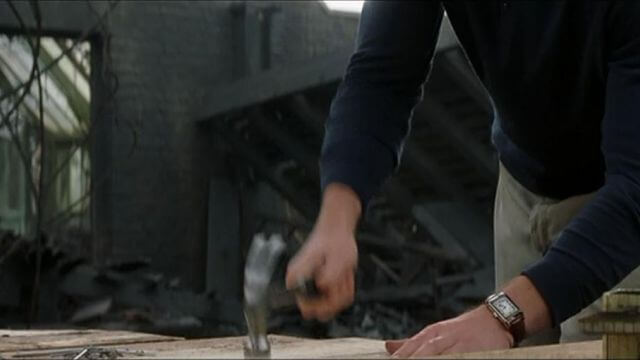
Tony Soprano’s yellow-gold Day-Date is the most famous watch on television. It represents “Portable Wealth” – assets that can be worn and traded if accounts are frozen – and cemented the Day-Date as the ultimate “Boss” watch.

10. Audemars Piguet Royal Oak – Entourage (TV)
Category: Best Cultural “Hype” Placement
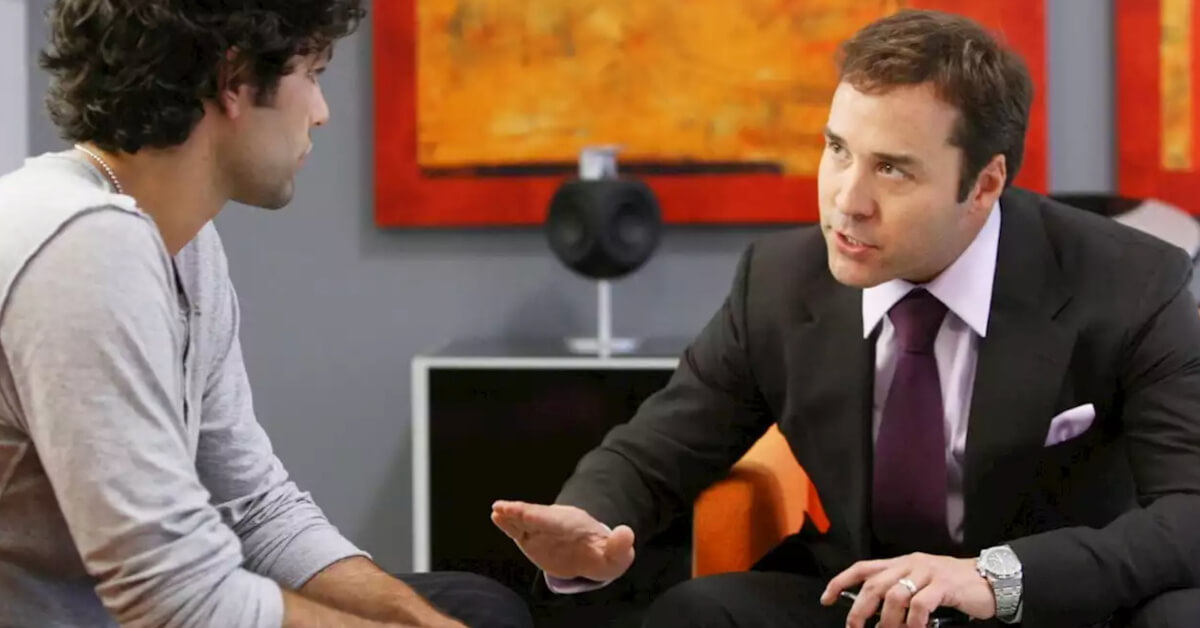
Before Ari Gold, AP was a secret for high-end collectors. Entourage brought the Royal Oak into the mainstream “baller” lexicon, using it to signal Hollywood hierarchy and launching the “Hype-Watch” era.
The Bonus List: 10 Essential Honorable Mentions
- 11. TAG Heuer 1000 Professional (The Wolf of Wall Street): Used as a tool of deception to project “fake” wealth.
- 12. Porsche Design Orfina 7176s (Top Gun): Launched the “Tactical Black” PVD trend in the watch industry.
- 13. Rolex GMT-Master “Pepsi” (Magnum P.I.): Proved a luxury watch could be rugged, laid-back, and “heroic.”
- 14. Hamilton Ventura (Men in Black): Perfectly matched the “mid-century futuristic” aesthetic of the MiB headquarters.
- 15. Cartier Tank (Mad Men): The ultimate “Old Money” timestamp representing the 1960s establishment.
- 16. Seiko Giugiaro 7A28-7000 (Aliens): Known as “The Ripley,” its offset design solidified Seiko as a futuristic innovator.
- 17. Bulova Lunar Pilot (The Right Stuff): A historical reminder of Bulova’s technical role in the 1960s Space Race.
- 18. Panerai Luminor (Daylight): The “Stallone Effect” – where one actor’s personal taste launched the “Big Watch” trend.
- 19. Rolex Datejust (American Psycho): A visual cue for the hollow, label-obsessed nature of 80s yuppie culture.
- 20. Casio F-91W (Breaking Bad): Tracks Walter White’s descent from an everyman to an ego-driven kingpin.
Frequently Asked Questions
Yes. Hamilton produced several custom watches for the production. Due to overwhelming fan demand, they eventually released a commercial version in 2019.
It was a strategic marketing move led by Jean-Claude Biver. Costume designer Lindy Hemming also argued that as a Naval Commander, Bond would historically be more likely to wear an Omega Seamaster.
No. In the movie, Jordan Belfort claims it is, but the watch used was a gold-plated TAG Heuer Professional 1000, which was worth significantly less.
It refers to Sylvester Stallone’s role in popularizing Panerai. After he wore the brand in Daylight, it went from an obscure Italian manufacturer to a global powerhouse.
Conclusion
Whether it’s a $15 Casio or a $50,000 Audemars Piguet, watches in film are never just “props.” They are storytelling engines. For a brand, a well-placed watch provides a level of cultural immortality that no billboard can match. For the viewer, these watches become the tangible connection between our world and the magic of the silver screen.