
Neon has always had a strange power on screen. It hums in the background of late-night scenes. It frames a character’s face in pink, blue, or electric red. It signals danger, romance, glamour, or decay without a single line of dialogue.
Over time, certain neon signs have moved beyond set decoration. They became visual shorthand for an era, a city, or even a brand. Audiences remember the glow as clearly as the actors standing beneath it.
Here’s how neon signage in film transformed from simple lighting to cultural symbol.
When a Sign Becomes Part of the Story
A neon sign becomes iconic when it does more than light a location. It anchors emotion. It repeats across key scenes. It becomes tied to a character’s identity or a film’s mood.
Think of the Las Vegas Strip in countless movies. The flashing casino signage instantly communicates risk, excess, and possibility. The story does not need to explain where we are. The glow tells us.
In Blade Runner, towering neon advertisements dominate the skyline. The city feels alive, crowded, and restless. The signs are not background elements. They are part of the world-building. Remove them and the film loses its atmosphere.

In Moulin Rouge!, the glowing red windmill and club signage frame the drama and romance. The color saturates the emotion of the scenes. The lighting is theatrical, but it also becomes inseparable from the film’s identity.
Neon, in these cases, carries narrative weight.
Breakfast at Tiffany’s: Branding in a Soft Glow
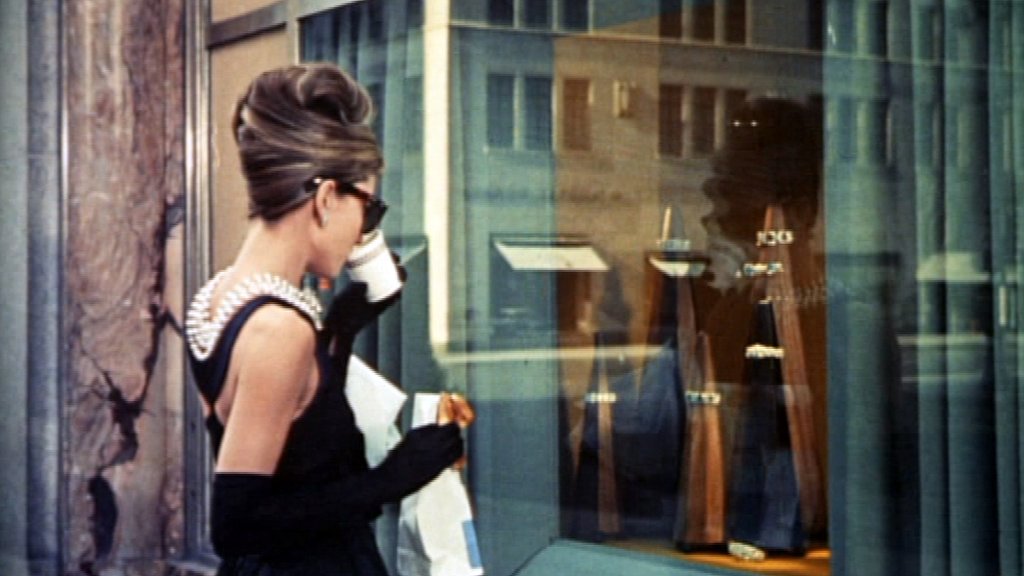
Few storefronts are as recognizable as Tiffany & Co. The film opens with Audrey Hepburn standing outside the store. The elegant signage, softly lit, reinforces luxury and aspiration.
That sign did not scream for attention. It did not need to. Its presence aligned the character with a dream of refinement and status. Viewers connected the glow of the store to the emotional arc of the story.
Here, branding and storytelling worked in quiet harmony.
The Grit of Motel and Diner Signs
American cinema often uses roadside neon to communicate longing, isolation, or economic struggle.
Motels, diners, and late-night bars appear in crime films and indie dramas with flickering signage outside. The glow reflects on wet pavement. It suggests transience. It hints at stories unfolding behind thin walls.
In films set in Los Angeles or Miami, these signs create a recognizable visual rhythm. Viewers may not remember the exact dialogue from a scene, but they remember the buzzing pink sign outside the window.
That repetition builds cultural memory.

Why Neon Works So Well on Screen
There are practical reasons directors return to neon again and again:
- It creates strong contrast in low-light scenes
- It outlines architecture and faces clearly
- It adds depth without heavy set construction
- It reinforces mood through color psychology
Red suggests urgency or desire. Blue leans toward cool detachment. Pink feels nostalgic. Green can signal excess or unease.
Filmmakers increasingly commission custom neon signs to control typography, brand accuracy, and color temperature. Instead of relying on existing street signage, production teams often design lighting that matches the tone of the script.
This level of control allows neon to become part of visual storytelling rather than random decoration.
From Prop to Brand Asset
Neon in film is not only about mood. It can serve as a powerful marketing tool.
Restaurants, clubs, and hotels that appear in movies often see a spike in recognition when their signage is featured prominently. The glow becomes a backdrop for a dramatic moment. That image circulates in trailers, posters, and social media.
Brands now invest in custom neon signs for set placements because lighting sticks in memory. A well-designed sign behind a lead character can achieve more recall than a passing product shot.
The sign does not interrupt the scene. It lives within it.
This subtle presence makes neon particularly effective in entertainment marketing.
The Revival of Neon in Modern Streaming
Streaming platforms have pushed neon back into the spotlight. Teen dramas, cyber thrillers, and music-driven series frequently use saturated lighting to create shareable visuals.
Scenes framed by glowing signage circulate on Instagram and TikTok. Screenshots become wallpapers. The lighting becomes a trend.
Production designers now prefer LED-based alternatives that mimic traditional glass tubing while offering safety and flexibility. Companies such as NeonChamp work with businesses and creatives looking to recreate cinematic-style lighting for commercial spaces and branded environments.
As streaming continues to compete for visual distinctiveness, neon offers a reliable way to stand out.
Neon and Cultural Afterlife
Some signs outlive the films that featured them.
Fans travel to filming locations to photograph iconic storefronts. Replicas appear in themed bars and pop-up events. Merchandise borrows the same typefaces and color palettes.
A glowing sign outside a fictional nightclub can inspire real-world décor trends. Homeowners and entrepreneurs adopt similar aesthetics to capture that cinematic feel.
This is where design crosses into cultural territory. The sign no longer belongs only to the movie. It becomes part of shared visual language.
The growing demand for custom neon signs reflects this shift. Businesses want lighting that feels cinematic. Creators want pieces that photograph well. Audiences want spaces that resemble the scenes they love.

When Light Becomes Legacy
Neon has survived shifts in technology and taste. From vintage motels to futuristic skylines, it remains one of the most expressive visual tools in cinema.
A glowing sign can introduce a setting before a single word is spoken. It can reinforce brand identity without overt advertising. It can shape how a city is remembered on screen.
Some props fade into the background of film history. Neon rarely does. It lingers in memory, humming softly, long after the credits roll.