
In a film where every millisecond matters, even the watch matters. In F1: The Movie, Joseph Kosinski’s 2025 blockbuster starring Brad Pitt, one of the most quietly effective supporting actors on screen isn’t human – it’s a reimagined 1970s IWC Schaffhausen Ingenieur, bespoke-built for a fictional racing driver, worn on a real wrist, at real Grand Prix circuits, at real speed.
That’s not product placement. That’s product storytelling. And it’s worth understanding exactly why it worked – and what every brand considering a film partnership could learn from it.
What Is F1 and Why Does It Matter for Brands?
Released on 27 June 2025, F1 is an Apple Original Films production distributed worldwide by Warner Bros. Pictures. Directed by Joseph Kosinski (the man behind Top Gun: Maverick) and produced by Jerry Bruckheimer, Lewis Hamilton, and Brad Pitt himself, the film follows Sonny Hayes (Pitt), a veteran driver who left the sport under a cloud in the 1990s, returning to Formula 1 as mentor and teammate to rookie Joshua Pearce (Damson Idris) at the fictional APXGP team.
What sets the film apart from every previous racing movie is its commitment to authenticity.

Filming took place across two real F1 seasons – beginning at the 2023 British Grand Prix – at real circuits including Silverstone, Miami, Las Vegas, and Abu Dhabi. The APXGP cars weren’t props. They were Dallara F2 chassis modified with a Formula 1 aerodynamic package developed by Mercedes Applied Science, capable of reaching 300 km/h. Both Pitt and Idris underwent months of professional driver training. More than 185 hours of footage was shot across 14 Grands Prix. As Kosinski himself told IWC: “When they are driving, you see them strain against the force of the wheel and pulling real g-forces in the corners. They are not acting. They are driving.”

The result? A global box office figure of more than $630 million, making it the highest-grossing sports film of all time and the highest-grossing film of Brad Pitt’s career. For any brand that was woven authentically into that world, the exposure was enormous. But IWC didn’t just chase exposure, they earned belonging.
Why IWC Schaffhausen Was the Right Brand for F1
Brand fit in film is everything. The wrong placement – however well-funded – registers as interruption. The right one disappears into the fabric of the story. IWC had a rare advantage before a single frame was shot: they were already credible inside Formula 1.
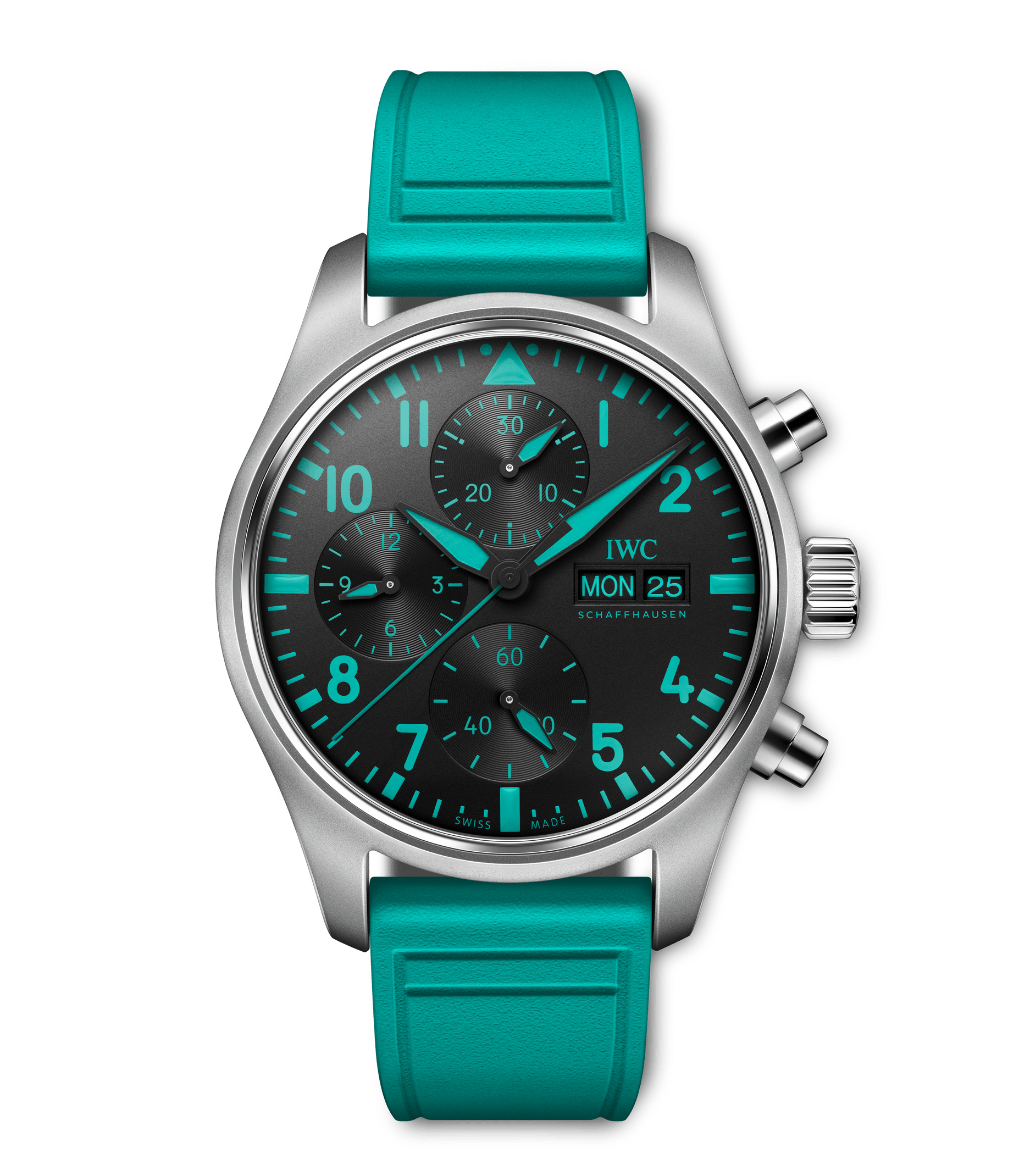
Since 2013, the IWC logo has been on the race suits of some of the sport’s greatest drivers: Valtteri Bottas, Nico Rosberg, George Russell, and Sir Lewis Hamilton, through the brand’s long-standing partnership with the Mercedes-AMG PETRONAS Formula One Team. That’s over a decade of trackside presence, twelve seasons of genuine motorsport credibility. When IWC appeared on the APXGP cars in the film, it didn’t feel grafted on. It felt like the natural extension of something real.
There’s also the creative relationship to consider. IWC CEO Chris Grainger-Herr noted that the brand had already worked closely with Kosinski and Bruckheimer on Top Gun: Maverick, and admired their commitment to avoiding CGI and prioritising genuine, physical action. Trust between a brand and a filmmaker is underrated in placement strategy. Here, it was foundational.
IWC CMO Franziska Gsell put it plainly: “We are now in our 12th season with Mercedes AMG, and to bring that into this fictional APXGP team is just brilliant. So many people already know our brand through Formula One, and F1: The Movie will attract an even broader audience.”
The Placement Strategy: Three Layers, Not One
Most brand placements operate on one level: logo visibility. IWC operated on three. Understanding each layer is where the real strategy lesson lies.
Layer 1: Team Sponsorship (Logo Exposure)
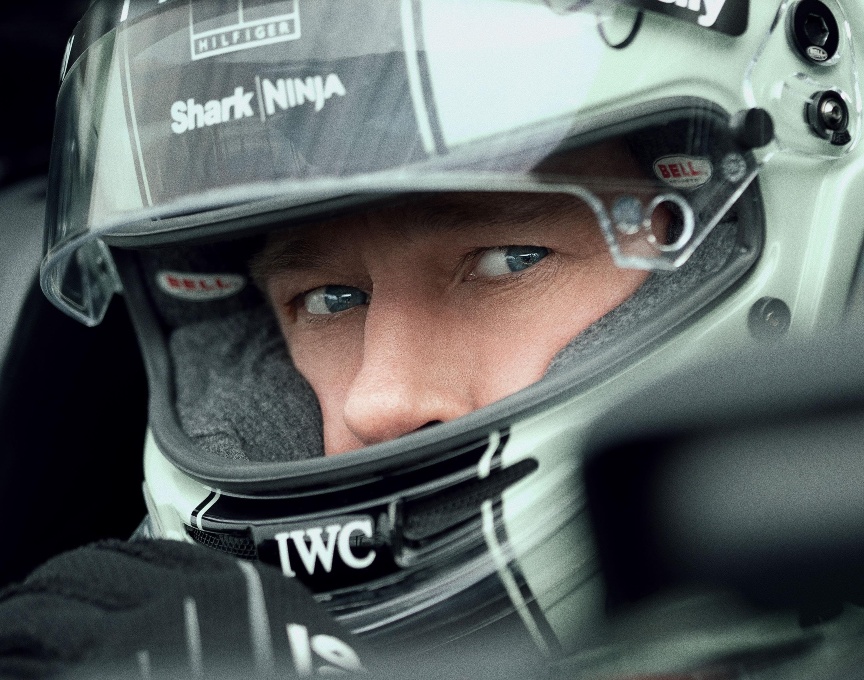
IWC appeared as one of the official sponsors of the fictional APXGP team, with its branding visible on the race cars, the drivers’ race suits and helmets, the team uniforms, and throughout the garage. This is the most conventional layer — logo placement – and in a film that spent two seasons shooting at real Grand Prix events, it achieved extraordinary scale. Brand sponsorships in the film collectively generated at least $40 million according to Forbes estimates. IWC’s position on the car and suits kept the name in frame across hundreds of racing sequences.
Layer 2: Character Watches (Narrative Integration)
This is where IWC separated itself from every other brand in the film. The watches weren’t selected by a placement agency. They were chosen character by character, with intention.
Director Kosinski was explicit about this: “Watches are an important element in this film as they reflect aspects of the different characters that wear them. Sonny Hayes felt like he would have a vintage timepiece with a special character, so the modified Ingenieur SL from Gérald Genta was a perfect match – something that his father would have worn and given to him.”
For Pearce, the rookie played by Damson Idris, the brief was different: a watch that combines performance with exclusivity. He wears an 18-carat gold-cased Pilot’s Watch Performance Chronograph 41 – aspirational, showy, the watch of someone who has arrived but still has everything to prove.
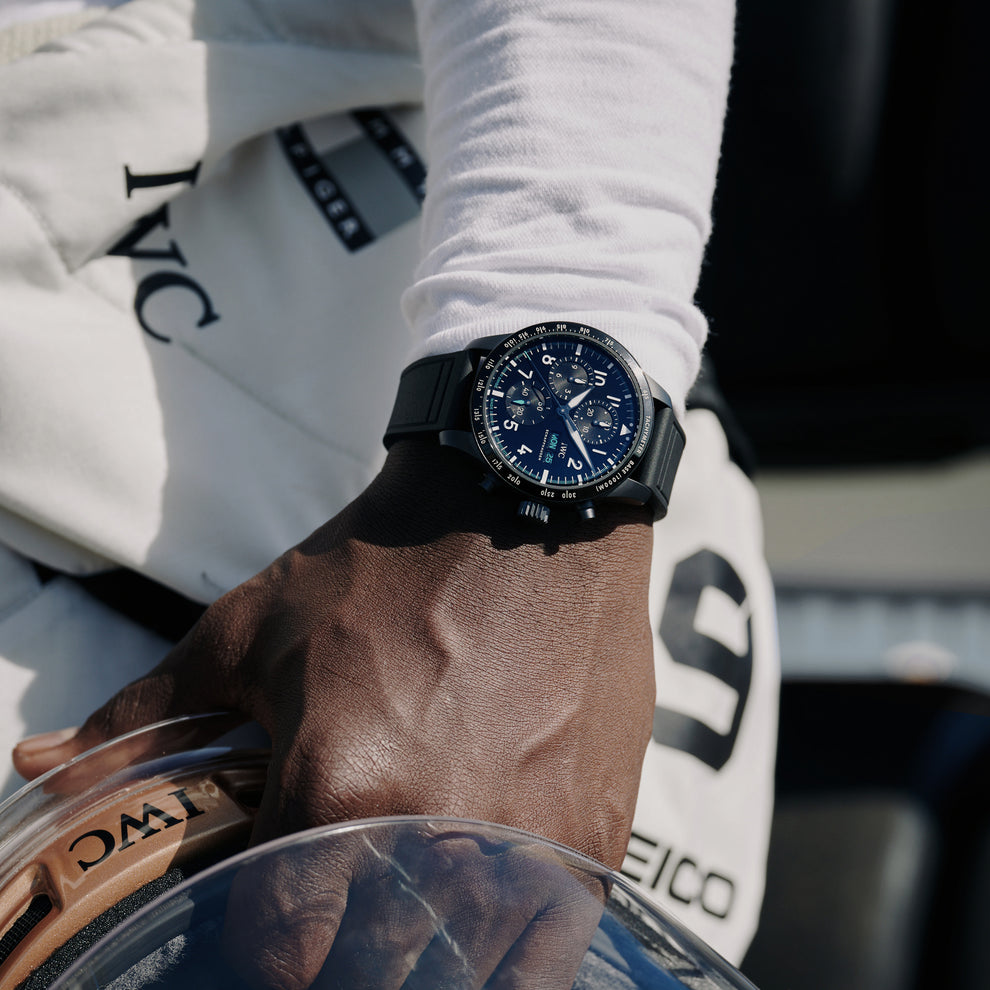
Pit crew and mechanics wear steel Pilot’s Chronographs – functional, robust, professional. Every character. A different watch. A different story. That’s costuming with commercial intent, and it’s rare to see a brand execute it this deliberately.
Layer 3: The Bespoke Hero Watch (Character Design)
The most remarkable detail in the entire campaign is the watch on Brad Pitt’s wrist and how it got there.
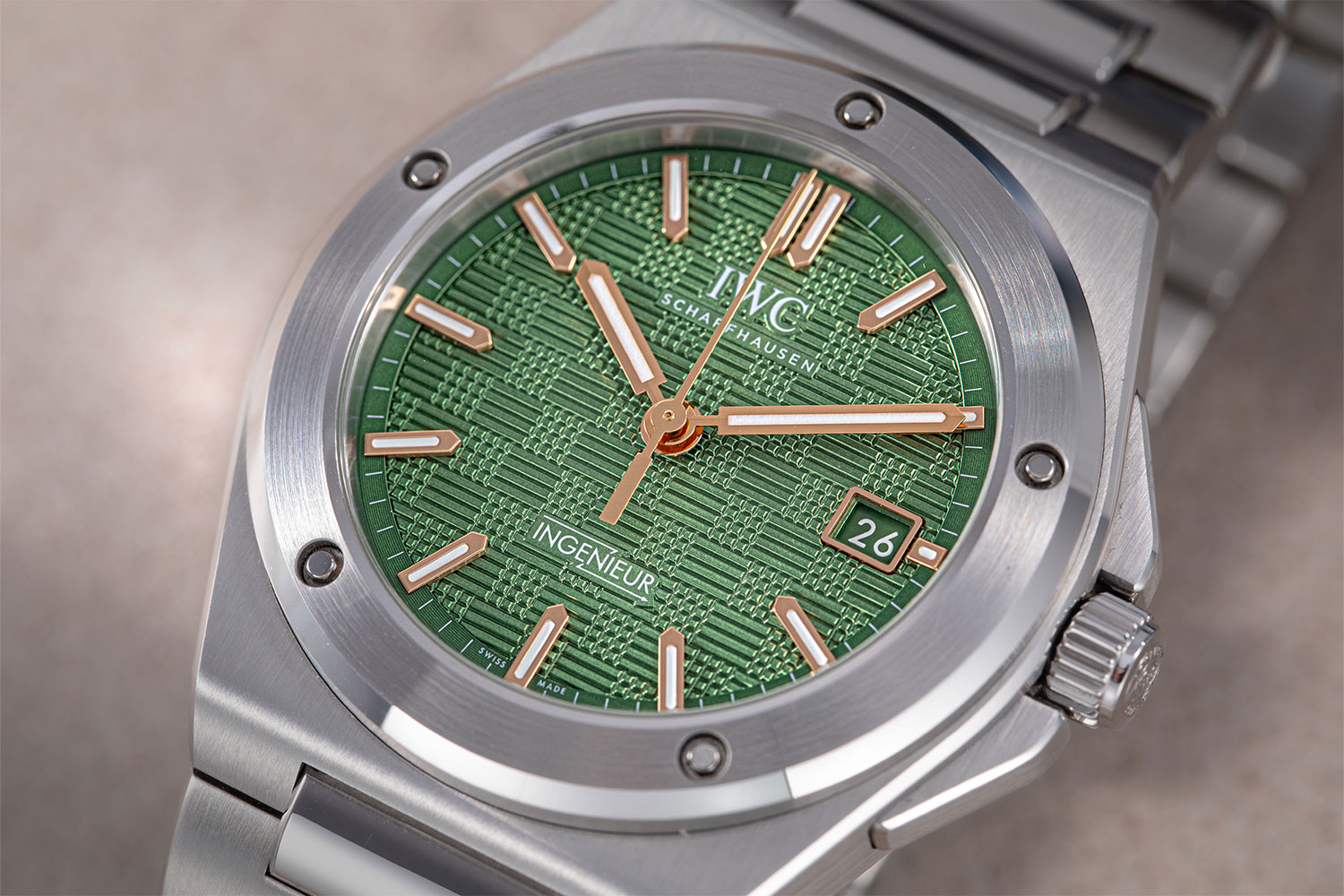
Ahead of filming, Pitt approached IWC to create a watch for the role. But it was not a new model he had in mind. Instead, he handed over a vintage Ingenieur SL reference 1832 and requested a resto-mod. He wanted it slimmer – closer to the profile of an Audemars Piguet Royal Oak or Patek Philippe Nautilus – and fitted with a new olive green dial.

Normally, a request like this, especially involving a historically important reference, would be met with a firm refusal. But IWC saw it differently. They recognised that F1 was not just any film.
To achieve the thinner case, IWC’s R&D team removed the anti-magnetic inner cage and replaced it with a slimline case and movement holder, without altering the movement itself. The new olive green dial was commissioned from Cloister Watch Company, a New York specialist in bespoke vintage timepieces. The result: a one-of-a-kind prop watch built from an existing Gérald Genta design, modified at the request of the lead actor, for a specific fictional character. Product placement rarely gets this close to art direction.
IWC Product Placement in F1: At a Glance
| Placement Type | What It Was | Character/Context | Signal |
|---|---|---|---|
| Team Sponsorship | IWC logo on cars, suits, helmets, garage | APXGP team-wide | Brand credibility, mass visibility |
| Hero Watch (bespoke) | Custom Ingenieur SL ref. 1832, olive green dial | Sonny Hayes (Brad Pitt) | Veteran status, taste, heritage |
| Character Watch | 18ct gold Pilot’s Chronograph 41 | Joshua Pearce (Damson Idris) | Ambition, performance, exclusivity |
| Ensemble Watch | Steel Pilot’s Chronograph APXGP | Pit crew and mechanics | Professionalism, precision |
| Limited Edition Release | Ingenieur Automatic 40 (1,000 pieces, green dial) | Retail / collectors | Translates story into commercial product |
Why This Placement Actually Worked
A lot of placements are visible. Fewer are effective. Even fewer are remembered. IWC’s presence in F1 belongs in that last category and there are specific reasons why.
It served the story, not the brand. The watches weren’t chosen because IWC paid for the placement. They were chosen because a watch belongs on the wrist of a racing driver, full stop. In motorsport, time is the entire sport. A chronograph is as native to a pit lane as a fuel rig. IWC’s products didn’t require justification; the context provided it.
It added authenticity, not decoration. Because IWC had twelve real seasons with Mercedes-AMG, their presence on the APXGP team was a credible fiction. Audiences who follow Formula 1 – a significant share of the film’s demographic — already associated IWC with the sport. The film extended that existing association rather than manufacturing a new one.

It created aspiration through character. One placement that genuinely impressed me in this campaign was the deliberate contrast between Sonny Hayes’s vintage Ingenieur and Joshua Pearce’s gold chronograph. Two characters, two watches, two completely different aspirational projections. Viewers don’t just see IWC – they see what IWC means for different people at different stages of their lives. That’s brand storytelling in its most efficient form.
It didn’t end at the credits. IWC launched a limited-edition Ingenieur Automatic 40 inspired by Pitt’s prop watch — just 1,000 pieces, with a green “Grid”-patterned dial and gold-plated details. The watches were unveiled at Watches and Wonders Geneva in April 2025 alongside a wrecked APXGP car used in filming. Two months before release, actors Damson Idris and Kerry Condon appeared at IWC’s garage at the Goodwood Members’ Meeting alongside an original race car from the film. By the time the film opened, the placement had already generated its own PR cycle entirely separate from the movie’s marketing.
What Brands Can Learn From F1 × IWC
Not every film is the right vehicle. And not every right film is approached correctly. Here’s what separates IWC’s strategy from the average logo placement.
Choose cultural fit over raw reach. F1 wasn’t just big – it was the right kind of big for IWC. An audience that already overlaps with the brand’s existing motorsport credentials, watching a film committed to the same values IWC claims: precision, performance, authenticity. The film’s $630 million global gross is impressive. What matters more is that virtually every viewer was already within IWC’s target demographic.
Become part of the world, not an interruption in it. Kosinski described IWC’s partnership as one that “does not feel forced at all,” citing their pre-existing Formula 1 credibility as an integral part of the filmmaking process. Brands that arrive with pre-existing context are always more convincing on screen than brands that arrive with cheques.
Design for story, not for screen time. The bespoke Ingenieur SL is the most instructive detail in this entire campaign. IWC didn’t place an existing product. They modified a vintage reference, at considerable effort, because the character required it. That’s a level of creative investment that communicates brand values without saying a word.

Think beyond release day. The Watches and Wonders launch. The Goodwood activation. The limited-edition retail collection. The social media cycle generated by watch spotters identifying the Ingenieur on Pitt’s wrist at the Hungarian GP the previous summer. A well-structured placement generates its own content ecosystem if the brand plans for it.
The Bigger Picture: Entertainment as Brand Infrastructure
The IWC × F1 partnership points to something larger happening in how premium brands think about entertainment.
The era of slapping a logo on a car and calling it a placement is over, at least for brands that are serious about it. The F1 film attracted at least $40 million in brand sponsorship, with partners including Expensify, GEICO, SharkNinja, MSC Cruises, EA Sports, and Tommy Hilfiger alongside IWC. Some of those are logo placements. IWC is something different: it’s a brand that co-authored the film’s visual language and character identity, then extended that into a retail collection, live events, and global PR.

The most sophisticated luxury brands are no longer asking “how do we get into this film?” They’re asking “how do we become part of this world?” and then building the creative and commercial infrastructure to sustain that presence long after the theatrical run ends. Hans Zimmer – composer of the film’s score – is also an IWC brand ambassador. That detail is not incidental. It’s the signature of a brand that understood this film as an ecosystem, not a placement opportunity.
The shift mirrors what’s happening in sport more broadly: brands moving from trackside banners to co-production credits, from passive visibility to active authorship of the stories audiences actually want to watch.
The Best Placements Aren’t Noticed – They’re Remembered
There’s a version of the IWC story in F1 where it’s just another watch on another wrist in another blockbuster. A logo in the background. A prop from the costume department. Instantly forgettable.
The version that actually happened is the opposite. A watch built from a vintage reference at an actor’s personal request. A director who described it as integral to character identity. A limited edition that sold into a waiting collector audience before the film even opened. A campaign that ran from Watches and Wonders Geneva to Goodwood to 44,000 cinema screens worldwide.
The difference between those two versions isn’t budget. It’s intent and the creative patience to let a brand belong to a story rather than merely appear in one.
Could your brand become part of a story audiences actually want to watch? The IWC playbook is as good a starting point as any.
Brad Pitt wears a bespoke IWC Ingenieur SL reference 1832 with a custom olive green dial, made in collaboration with Cloister Watch Company in New York. The prop watch was built specifically for his character Sonny Hayes — IWC modified the original 1976 vintage reference to create a slimmer case and a new dial, making it a one-of-a-kind film timepiece.
Yes. IWC Schaffhausen is an official sponsor of the fictional APXGP team in the film, with branding visible on the race cars, driver suits, helmets, team uniforms, and in the garage. The partnership was a paid, co-created collaboration rather than organic placement — IWC was involved in designing specific watches for each character’s role in the story.
es. IWC launched a limited-edition Ingenieur Automatic 40 (Ref. IW328908) inspired by the Sonny Hayes prop watch, limited to 1,000 numbered pieces. It features a green “Grid”-patterned dial with gold-plated details and is powered by the IWC-manufactured 32111 calibre. Three APXGP-themed Pilot’s Watch Chronographs were also released, priced between approximately $6,800 and $12,900.
IWC had an existing 12-season partnership with the Mercedes-AMG PETRONAS Formula One Team dating to 2013, giving them genuine motorsport credibility. The film partnership was a natural extension — bridging their real-world F1 presence into a cinematic context. The brand also had an established relationship with director Joseph Kosinski and producer Jerry Bruckheimer from Top Gun: Maverick.
According to Forbes estimates, brand sponsorships in F1: The Movie collectively generated at least $40 million. IWC Schaffhausen was among the most prominent partners, appearing as an official team sponsor with branding across the APXGP cars and race suits, as well as providing custom timepieces worn by the lead characters throughout the film.